
I didn’t expect to cry on a museum tour

Funny how emotions can blindside us.
A few weeks ago I booked myself on a guided tour of The Coffin Works in Birmingham, the beautifully preserved Newman Brothers’ factory where coffin furniture and burial shrouds were made for over a century.
The museum faithfully recreates the world of the people who worked there. My guide demonstrated metal stamping and other rooms were carefully preserved such as the manager's office, the sewing room and the stockroom.

Small details bring the past to life — the original tea and coffee list (Betty, May, Emily, Dolly to name a few), tools laid out as if the workers have just stepped away.
It is a place devoted to honouring the dead.


In the sewing room our guide spoke about the making of shrouds. One of the seamstresses, Elizabeth, whilst working at T. Ellis Jones, another coffin furniture manufacturer in Birmingham, had sewn some of the small shrouds for the 116 children who died in the 1966 Aberfan disaster. At his mention of Aberfan I could feel the tears prick my eyes and I struggled to compose myself. Those shrouds would have been needed for the children who died when a coal tip slid down the mountainside and engulfed Pantglas School in the village of Aberfan, taking 144 lives in total.
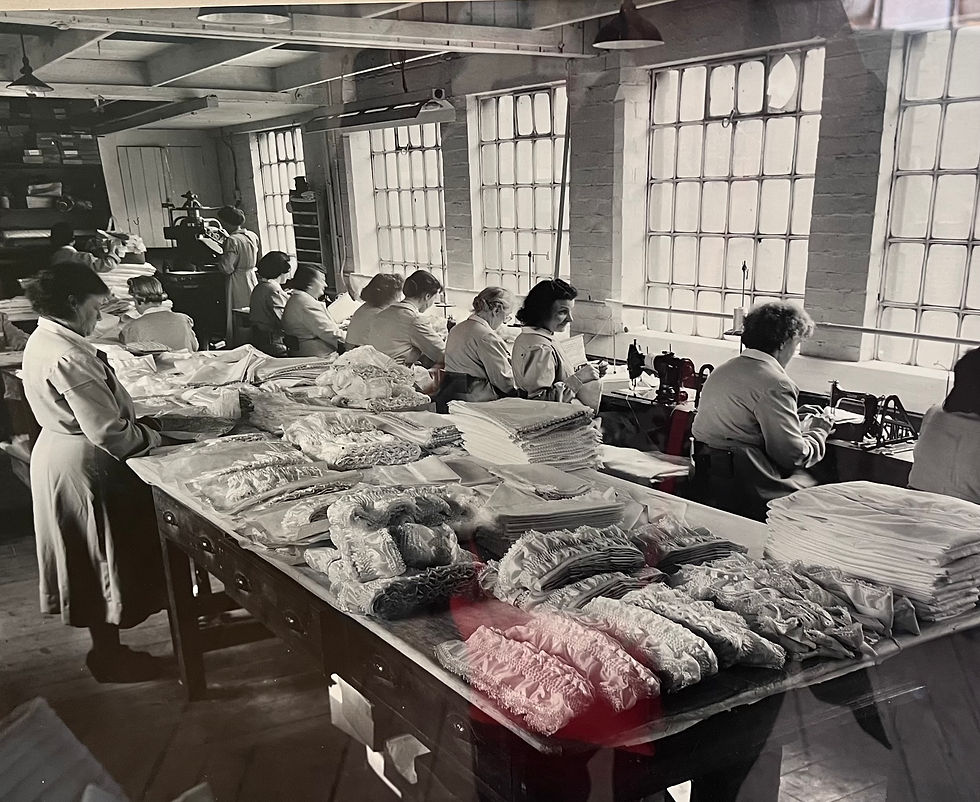
It evoked for me the hundreds, the thousands of people impacted by such a tragedy and the great waves of unimaginable grief. But also the silent humanity and care. Seamstresses quietly, lovingly making shrouds and craftsmen skilfully making coffins for those children’s final resting place.
Standing with grief
So when a cycling trip with a friend took us through Wales a few weeks later, I felt compelled to pay my respects at Aberfan.
Wales is a magnificent country to cycle through. The valleys are breathtakingly beautiful, the people wonderfully welcoming, and bara brith is, I can confirm, excellent fuel for long days in the saddle. Closely following the river Taff we approached Aberfan, and it seemed like a rather unremarkable Welsh village surrounded by glorious countryside. But as we approached the Aberfan Memorial Garden, I felt a sense of stillness and community.

The garden stands on the site of Pantglas Junior School, modest and peaceful . A local couple out walking with their grandchild stopped to chat to us and explained that the garden is laid out to the original floor plan of the school. The paths and plantings trace the corridors the children and their teachers would have walked along every school day.
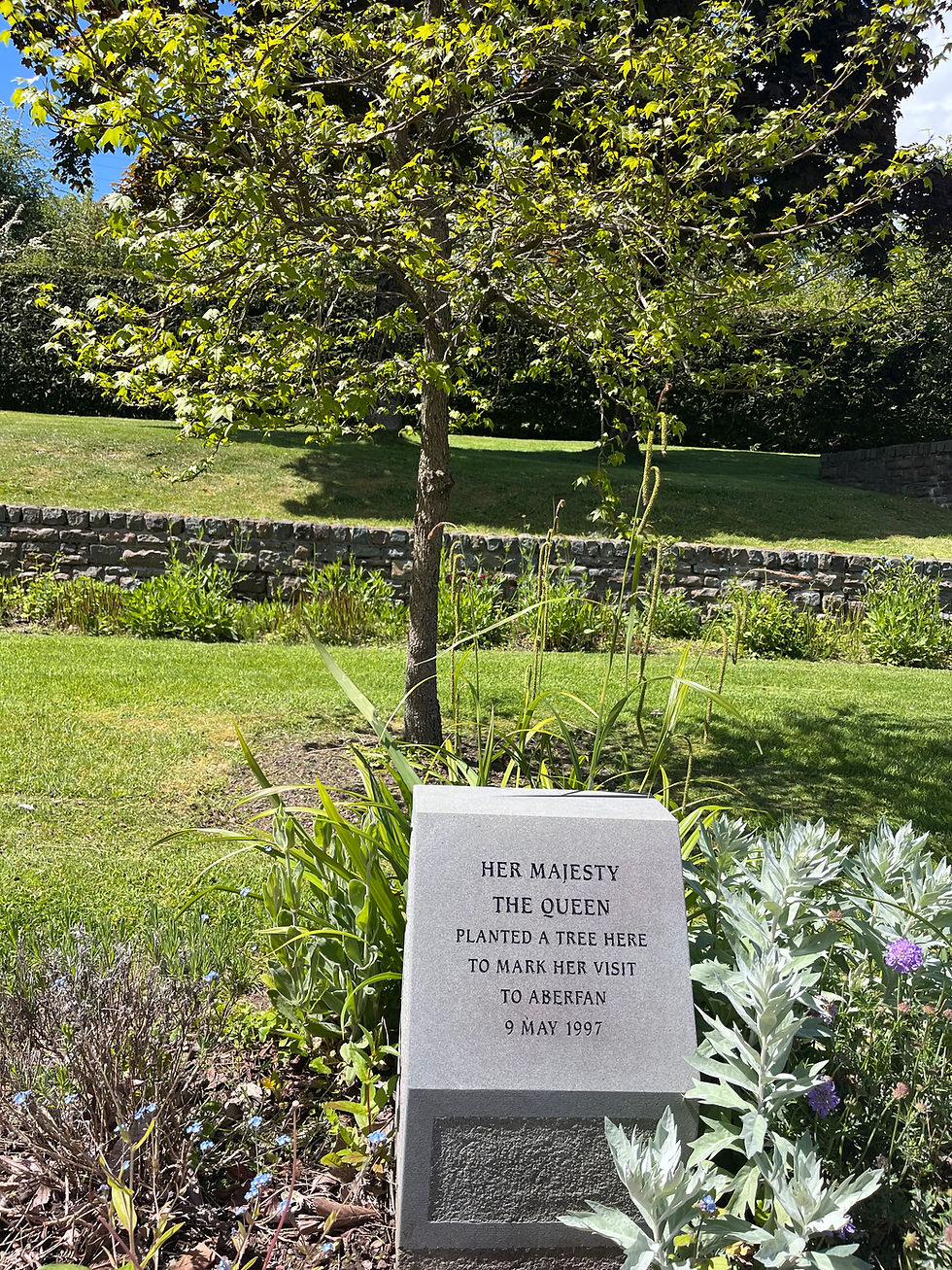

Across the road there is a row of houses who would have witnessed the disaster.
Standing there, the grief of that community felt visceral to me. It was in the air, the ground, the trees. Again, tears pricked my eyes.
I was struck by the quiet care, the enduring support and the humanity which can be at its best when life is at its worst. It’s the complex layers of grief - sadness, shock, anger, support, humanity, care, love, remembrance.
What these visits meant for me
There is an old saying that how we treat our dead is a measure of our humanity. I felt this powerfully at The Coffin Works, where the pride and care of those workers spoke of a profound seriousness about the act of farewell.
And I felt it again at Aberfan, a place of quiet dignity and remembrance.
Both visits reminded me of something I believe deeply, and that sits at the heart of the work I do.
Grief is not a problem to be solved, it becomes part of us.
When we allow ourselves to be still, to feel the sadness, the pain, the weight of loss we are doing something courageous and necessary.
We can feel so alone in our grief. But others have endured what you are enduring. Connecting to the losses of others helps us get in touch with our own grief.


Comments